Luxembourg Art Week 2026 - Opening Night- THE LIVE HEARTH SIGNAL ROOM
17:00–20:30 – Pre-opening programme at Casino Display
LIVE SIGNAL
With Lena Longefay and Marc-Olivier Hamelin
Périscope: Bruce Eesly (carte blanche to Elektron)
Upon reservation: [email protected]
Live Signal offers a glimpse into the wide range of artistic practices presented at Casino Display. Two performances and a video installation put distinct lines of research, methods and artistic forms in dialogue with one another.
The evening features Lena Longefay, a fellow of Casino Display’s Post-Master programme, with a performance centred on wine tasting, and Marc-Olivier Hamelin, whose performance is presented as part of a residency exchange between Casino Display and Est-Nord-Est (Saint-Jean-Port-Joli, Quebec). It also features a video installation by Bruce Eesly presented as part of périscope on the occasion of a carte blanche to Elektron, a long-standing partner of Casino Display.
Each contribution has grown through collaboration: between art schools, between residency spaces and with a partner rooted in the local arts scene. Live Signal brings these exchanges into view while allowing each practice to retain its own voice.
LENA LONGEFAY
A Sour Saga, Or How My Teeth Might Fall (2026)
Duration: 60 min
The performance explores acidity through spoken word, imagery and taste. Lena Longefay moves between pH, salivation, tooth pain and reflux, as well as landscapes, weather, slopes, lees and the flavour of wet stones or salted lemon peels.
Bio: The artistic practice of Lena Longefay (FR) questions the assumption that “natural” and “artificial” are necessarily two opposing notions. Born and raised in a family of winemakers, she is particularly interested in the relationship between ecosystems and man-made traditions in vine growing and winemaking, as well as the romanticised contradictions they carry, between regional pride, tipsy celebrations and silent suffering. Through storytelling, she transforms her research into installations and performances. She lives and works in The Hague (NL), as both an artist and sommelier.
Lena Longefay is part of the European Post-Master programme at Casino Display, a collaboration between Casino Display, Casino Luxembourg – Forum d’art contemporain, École Nationale Supérieure d’Art et de Design de Nancy, École Nationale Supérieure des Arts Visuels de La Cambre (Brussels), Haute École des Arts du Rhin (Strasbourg) and Koninklijke Academie van Beeldende Kunsten (The Hague).
MARC-OLIVIER HAMELIN
Crystal Clear
Duration: 60 min
A forest fire. Standing in a corner of the kitchen, my hands in the dishwater, I ask you: “What are you saying?” What? I repeat: “What are you telling me?” I do not know how to verify the truth of your story, the validity of the image you are showing me, or even the reality of your presence.
Drawing on the reappropriation of a queer family history, Marc-Olivier Hamelin’s new performance activates a memory that is not his own. The artist gives voice to forgotten stories and deliberately blurs the boundary between his memories and those of the audience. For some marginalised people, reappropriation and secrecy can also be means of survival.
A forest fire. I confide in you: “I’m not sure I want to hear the rest, because you might lie to me. But in the meantime, could you clear the kitchen table and bring me the dirty glasses?”
.Bio: Marc-Olivier Hamelin is a visual artist and author from Rouyn-Noranda (CAN). He holds a Bachelor of Fine Arts from Concordia University (2015) and a Master’s degree in Museology and Art Practices from the Université du Québec en Outaouais (2019), where he explored multiple voices within creative contexts. His work takes dialogue as its starting point and addresses issues related to self-narrative and the production of discourse. His projects – in which he connects his own voice with those of artists, authors and peers – take the form of installations, performances, photographs and texts.
Marc-Olivier Hamelin is taking part in the cross-residency programme between Est-Nord-Est (Saint-Jean-Port-Joli, Quebec) and Casino Display Luxembourg. This residency programme is made possible through the financial support of Kultur | lx – Arts Council Luxembourg and the Luxembourg Ministry of Culture, in partnership with Est-Nord-Est and the Government of Quebec.
PÉRISCOPE: CARTE BLANCHE TO ELEKTRON
BRUCE EESLY
Endangered Gestures
Set within a small, near-ground-level window at Casino Display and visible from the street, périscope hosts site-specific creations exploring moving images.
Based in Esch-sur-Alzette, Elektron is a platform dedicated to the intersections of art, digital technologies, science and societal challenges. Established in 2023 following Esch2022, it supports digital creativity and encourages public debate on emerging technologies through exhibitions, workshops and events open to all.
As part of the carte blanche extended to Elektron, the platform invited Berlin-based artist Bruce Eesly. His short film Endangered Gestures features hand gestures representing concepts currently under threat from authoritarian shifts worldwide. Pairing censored words with AI-generated gestures, the result sits somewhere between speculative sign language and technical error.
21:00–1:00 – Evening programme at Casino Luxembourg
THE HEARTH ROOM
Artists: Miriam Hansen, Christoph Meier, Ute Müller, Andreas Olavssønn Rongen
For Luxembourg Art Week, The Hearth Room, the exhibition by Christoph Meier & Ute Müller at Casino Luxembourg, enters a new phase.
At the intersection of sculpture and architecture, The Hearth Room transforms the first floor of Casino Luxembourg into an evolving space for production, experimentation and encounter. A functioning ceramic kiln forms one of its central elements. Clay preparation, drying, firing and making unfold throughout the exhibition, gradually transforming the space over time. The “hearth” refers both to fire and to the home, a place of transformation as much as a space for gathering.
During Luxembourg Art Week, Miriam Hansen and Andreas Olavssønn Rongen join Christoph Meier & Ute Müller to work with the kiln, clay and the exhibition space. Working with tobacco plants cultivated as part of their collaborative practice, Hansen and Rongen explore their material and atmospheric properties. The plants are dried and incorporated into ceramic experiments.
A temporary structure, the Growth Room, also takes shape within the exhibition, somewhere between a grow room, a smoking area and a temporary social space. Echoing the kiln, it becomes another site of production, albeit of a different kind: a space where exchanges, conversations and ideas can emerge.
.On Friday evening, this new configuration of The Hearth Room opens up to the public. The objects and transformations produced during the week encounter the people gathered in the space. Something to drink, conversations, shared presence - and a place whose purpose becomes clearer as people come together and the evening unfolds.
Christoph Meier & Ute Müller – The Hearth Room
Curated by Stilbé Schroeder
11.09.2026–10.01.2027
The artists
Christoph Meier and Ute Müller are Austrian artists whose practices explore the relationships between sculpture, architecture and exhibition space. Their work places particular emphasis on processes of production, experimentation and collaborative situations that contribute to transforming both the artwork and its context. With The Hearth Room, they develop an evolving project at Casino Luxembourg combining artistic research, collaborative production and experimentation.
Miriam Hansen (b. 1988) works primarily with installation and sculpture. Her practice draws on an interest in plants, plant history and contemporary discourse around mind-altering plants as medicine and cultural heritage. Through a site-specific approach, she develops installations that accommodate cycles of growth and decay and explores how atmospheric changes shape the bodily experience of a space.
Andreas Olavssønn Rongen (b. 1989) lives and works in Oslo. His work explores presence and exclusion, often expanding on site-specific observations and patterns of movement. Filtered through fiction, misunderstandings and speculation, these impressions inform sculptural investigations that often take the form of ecosystems or archives documenting interventions, routines, rhythms and repetitions. He also participates in collaborative projects exploring the intersections between sculpture, architecture and performative expression.
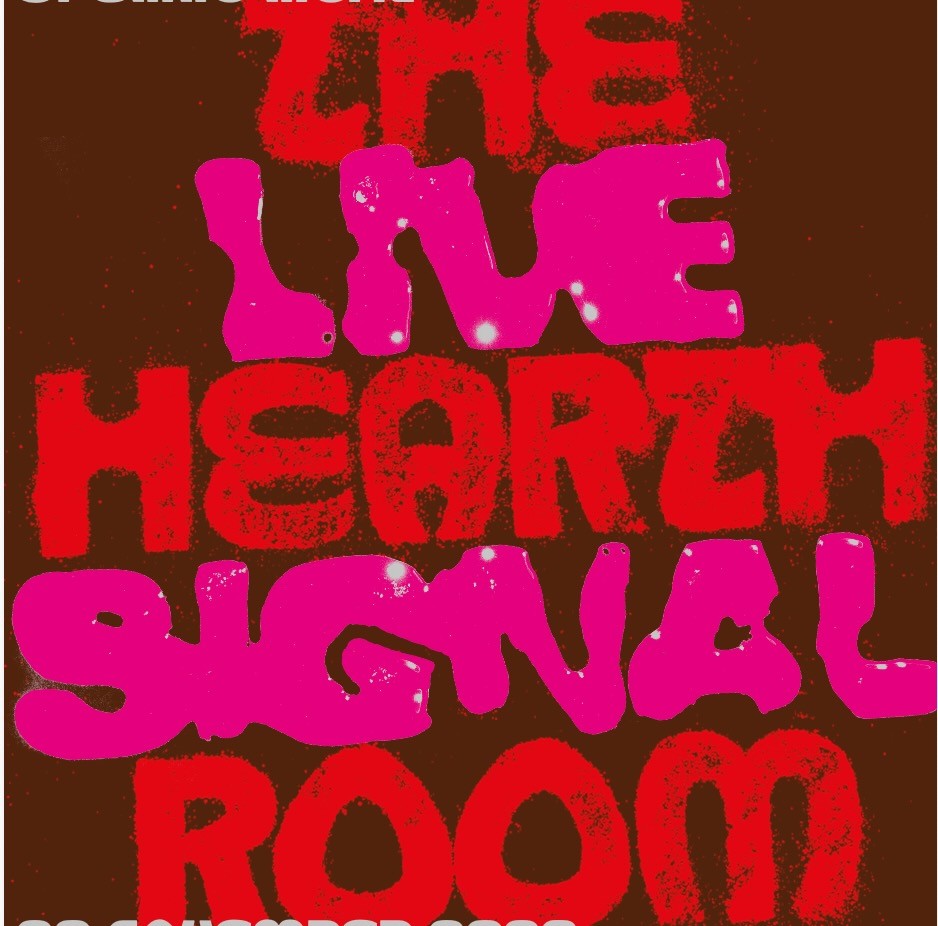
Graphic design: Hannes Brischke