


Bonnevoie-Nord / Verlorenkost
Bonnevoie-Nord, also known as Verlorenkost, is a district in the eastern part of Luxembourg City whose development is closely linked to the city’s former fortress. For many decades, the area was shaped by military use, which has had a lasting influence on its layout and later urban development.
Historical background and development
A key reminder of this military past is Fort Verlorenkost, built in the 19th century as part of Luxembourg’s extensive fortification system. Even after the dismantling of the fortress, the area remained marked by this period for a long time.
One of the most significant events in the district’s history was the powder explosion of 1807, which caused widespread damage and highlighted the risks associated with military installations. More intensive civilian development began only in the early 20th century, when residential buildings and public facilities were constructed, marking the transition from a military zone to an urban residential district.
Several buildings from the 17th century have been preserved and offer insight into the architecture of that era. The street layout and building structure reflect the gradual transformation of the area.
Culture at the Rotondes
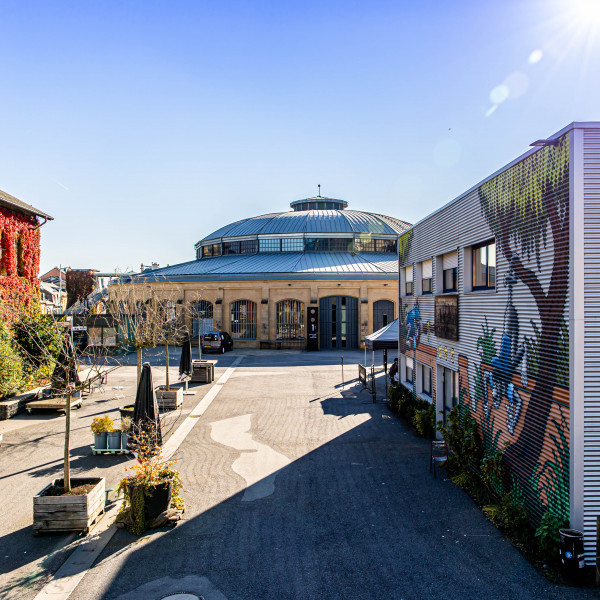
A major attraction for visitors is the Rotondes, a cultural centre housed in two former railway engine sheds dating from the age of steam locomotives. Built from 1877 onwards, these circular buildings were originally used for locomotive maintenance.
After being listed as a national monument, the Rotondes were gradually opened for cultural use. Today, they host a wide-ranging programme including theatre, music, exhibitions, socio-cultural projects and workshops. A café with an outdoor terrace makes the site an inviting meeting place even outside event times.
Green spaces and sport
The proximity of the Alzette Valley offers opportunities for walks along the river and creates a green transition between densely built urban areas and more natural surroundings.
The district is also home to the Stade Achille Hammerel, a traditional football stadium and the home ground of Racing FC Union Luxembourg, closely linked to the local sporting history.
How to get there?
Clausen is easy to reach by car, public transport, or on foot. Luxembourg City’s bus network connects the district regularly with the Old Town and Kirchberg. From the Upper City, you can reach Clausen within minutes via scenic footpaths and bridges
By car:
Find the best parking for your stay with our Luxembourg-city parking guidance system.
By public transport:
To go around the city, check out www.mobiliteit.lu which offers live and practical information on public transport in Luxembourg.
Useful information: all buses, trams and trains within the country of Luxembourg are free of charge for citizens and visitors alike.
Photo gallery


