
The Hearth Room
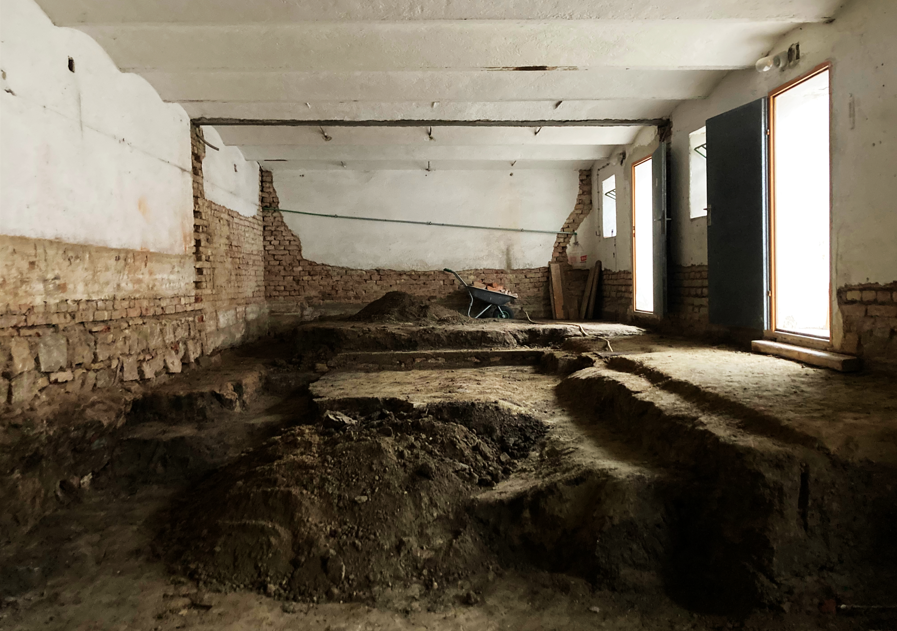
Where does artistic work begin, and where does its production end? When does an exhibition start, and when does its preparation cease? The Hearth Room is not an exhibition where everything arrives finished; it evolves over time. What serves as a workspace today may transform into a stage tomorrow; what starts as raw material may end up as part of the installation’s architecture. For Christoph Meier and Ute Müller, their exhibition is not about displaying completed works; it is about revealing the context and conditions of production itself. In collaboration with artists and architects Stefan Guttmann, Miriam Hansen, Ruben Mahler, Andreas Olavssønn Rongen, Grischa Schmidt and Gregor Titze – alongside others who will join in the coming months – the project creates a space where material, spatial and social processes interact and shape one another.
.The core material used here is clay. Malleable by hand, it absorbs pressure, retains touch and captures surfaces. Only through firing does this soft, reversible substance gain permanence. In Vienna, where Meier and Müller live and work, vast clay deposits on Wienerberg were once used to produce the bricks that built the rapidly expanding Austrian capital. By the late nineteenth century, the harsh living and working conditions of the predominantly migrant brick workers became a catalyst for Austria’s labour movement.
The hearth designates the central place of the home. The fire evokes the hearth and the kiln, conviviality and production. In the former Casino Bourgeois, this interplay takes on added significance: a space historically defined by social display is transformed into a site of collective making, use and transformation.
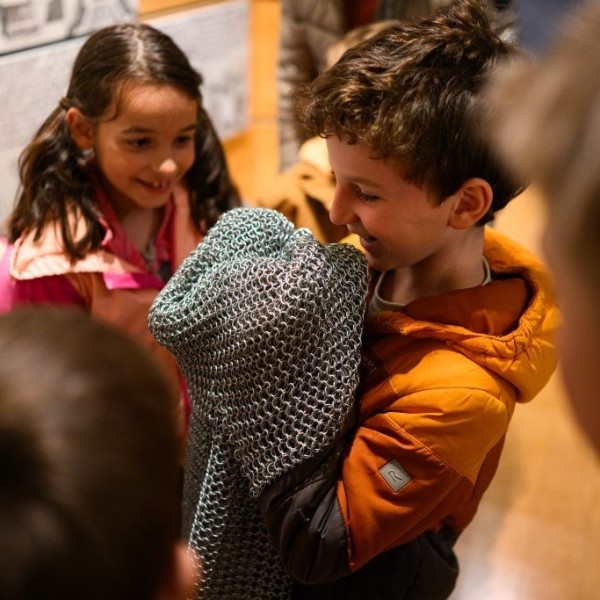
The Hearth Room follows no fixed script. Over time, shifting states and rhythms inscribe themselves into the space, turning it into a material and social archive of its own creation and use. This archive is not exclusive to the artists. Visitors do not stand outside the process; they can observe its evolution, linger within it, or take part. Picking up a piece of clay and leaving a mark can mean becoming part of a work whose outcome is not predetermined, a work that emerges precisely because it is shaped by many.
.